



Bcl-2
Bcl-2 (B-cell lymphoma 2) is a central anti-apoptotic regulator that preserves mitochondrial integrity by preventing mitochondrial outer membrane permeabilization (MOMP), a critical checkpoint controlling cytochrome c release and caspase activation during intrinsic apoptosis[1][2]. Mechanistically, Bcl-2 functions through direct interactions with pro-apoptotic BCL-2 family proteins, including Bax and Bak, thereby suppressing their oligomerization and limiting mitochondrial membrane disruption[3][4]. The protein also integrates signals transmitted by BH3-only proteins, which regulate the balance between cell survival and programmed cell death under physiological and pathological stress conditions[3][5]. Dysregulated Bcl-2 expression contributes to apoptosis resistance in multiple malignancies and supports tumor cell survival by maintaining mitochondrial homeostasis despite cellular stress[6][7]. In disease models, the anti-apoptotic activity of Bcl-2 is closely linked to mitochondrial apoptosis pathways that represent major therapeutic targets in hematologic and solid cancers[6][8]. Compared with related anti-apoptotic isoforms such as Mcl-1 and Bcl-B, Bcl-2 displays broader interactions with both Bax and Bak, whereas Mcl-1 and Bcl-B show preferential regulation of Bak- and Bax-dependent apoptotic pathways, respectively[4]. For experimental applications, BH3-mimetic inhibitors disrupt the interaction between Bcl-2 and pro-apoptotic partners, thereby restoring mitochondrial apoptosis and providing a widely used strategy for mechanistic studies and targeted cancer research[7][8].
References:
- [1]. Harris MH, et al. The role of the Bcl-2 family in the regulation of outer mitochondrial membrane permeability. Cell Death Differ. 2000;7:1182-1191.
- [2]. Breckenridge DG, et al. Regulation of mitochondrial membrane permeabilization by BCL-2 family proteins and caspases. Curr Opin Cell Biol. 2004;16(6):647-652.
- [3]. Kale J, et al. BCL-2 family proteins: changing partners in the dance towards death. Cell Death Differ. 2018;25:65-80.
- [4]. Zhai D, et al. Differential regulation of Bax and Bak by anti-apoptotic Bcl-2 family proteins Bcl-B and Mcl-1. J Biol Chem. 2008 Apr 11;283(15):9580-6. [Content Brief]
- [5]. Lomonosova E, et al. BH3-only proteins in apoptosis and beyond: an overview. Oncogene. 2008 Dec;27 Suppl 1(Suppl 1):S2-19. [Content Brief]
- [6]. Danial NN. BCL-2 family proteins: critical checkpoints of apoptotic cell death. Clin Cancer Res. 2007;13(24):7254-7263.
- [7]. Akl H, et al. A dual role for the anti-apoptotic Bcl-2 protein in cancer: Mitochondria versus endoplasmic reticulum. Biochim Biophys Acta. 2014;1843(10):2240-2252.
- [8]. Kang MH, et al. Bcl-2 inhibitors: targeting mitochondrial apoptotic pathways in cancer therapy. Clin Cancer Res. 2009 Feb 15;15(4):1126-32. [Content Brief]
-
Bcl-2 Related Products (317)
Related Products (317)

-
Antibodies (6)
-
MAHS-3
 0 ImagesCat. No.: HY-187513MAHS-3 is a thymidylate synthase (TS) and dihydrofolate reductase (DHFR) inhibitor, with IC50 values of 5.279 μM and 52.60 μM against human targets, respectively. MAHS-3 exhibits broad-spectrum antiproliferative activity against cancer cells, induces cell cycle arrest, activates endogenous caspase-dependent apoptosis, reduces MMP levels, inhibits cell migration, increases intracellular NO levels, and promotes autophagy activity. MAHS-3 can be used in cancer-related research.
-
ICD inducer-2
 0 ImagesCat. No.: HY-181673CAS No.: 3069681-35-9ICD inducer-2 is a immunogenic cell death inducer. ICD inducer-2 binds to the colchicine binding site on tubulin to inhibit tubulin polymerization. ICD inducer-2 exhibits broad-spectrum antiproliferative activity across multiple cancer cell lines. ICD inducer-2 inhibits cells migration, causes G2/M phase and induces apoptosis. ICD inducer-2 promotes infiltration of CD4+ and CD8+ T cells into the tumor microenvironment. ICD inducer-2 downregulates antiapoptotic protein Bcl-2, upregulates proapoptotic proteins Bax and Bim-1, and increases cleaved caspase 3, cleaved caspase 9, and cleaved PARP levels. ICD inducer-2 overcomes paclitaxel resistance in xenograft models and achieves tumor growth inhibition. ICD inducer-2 can be used for the research of cancer, such as lung carcinoma.
-
XSJ151
 0 ImagesCat. No.: HY-179520CAS No.: 1685279-23-5XSJ151 is a topoisomerase I inhibitor, stabilizing the DNA-Topo I covalent complex and inducing DNA double-strand breaks. XSJ151-induces DNA damage activates the p53-p21 signaling pathway, specifically regulating the expression of cyclins, leading to G2/M phase cell cycle arrest and disrupting the dynamic homeostasis of Bcl-2 family proteins, thereby triggering apoptosis in gastric cancer cells. XSJ151 can be used for the study of gastric cancer.
-
BRD4-IN-12
 0 ImagesCat. No.: HY-181505CAS No.: 3112325-99-9BRD4-IN-12 is a potent and orally active BRD4 inhibitor with an IC50 of 7.9 nM. BRD4-IN-12 downregulates the expression of c-MYC, BCL-2, CDK4 and upregulates p21. BRD4-IN-12 inhibits tumor cell proliferation and promotes apoptosis. BRD4-IN-12 exhibits excellent antitumor effects in the HCT-116 colorectal cancer xenograft model. BRD4-IN-12 can be used for the study of colorectal cancer (CRC).
-
Anticancer agent 65
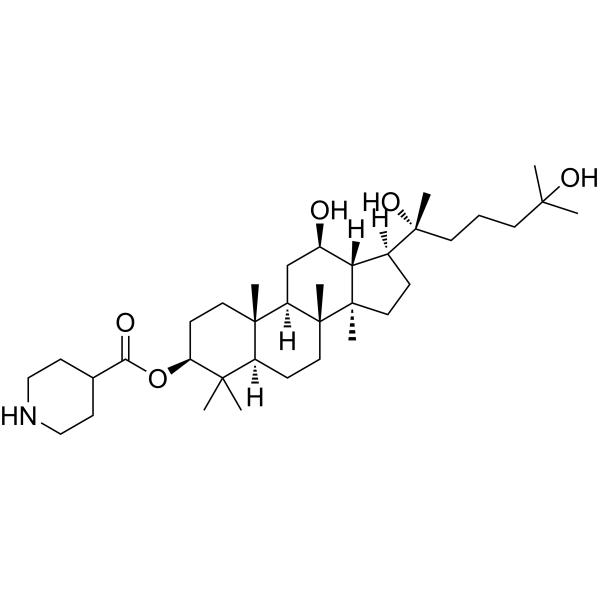 0 ImagesCat. No.: HY-146105CAS No.: 2407861-48-5Anticancer agent 65 (compound 4c) shows excellent activity in cancer cell lines, especially A549 cells, with an IC50 of 1.07 μM. Anticancer agent 65 induces S-phase arrest in A549 cells and increases the expression level of p53 and p21. Anticancer agent 65 causes apoptosis, ROS generation and collapse of MMP in A549 cells.
-
HDAC-IN-93
 0 ImagesCat. No.: HY-178104HDAC-IN-93 is a HDAC inhibitor with promising total pan-HDAC inhibitory activity. HDAC-IN-93 demonstrates significant broad-spectrum antiproliferative activity across various cancer cell lines. HDAC-IN-93 induces cell apoptosis along with necrosis. HDAC-IN-93 can be used for the studies of prostate cancer and breast cancer.
-
GPER/Bcl-2-IN-1
 0 ImagesCat. No.: HY-174338GPER/Bcl-2-IN-1 is a GPER/Bcl-2 inhibitor. GPER/Bcl-2-IN-1 can inhibit the proliferation and neurospheres formation of glioblastoma cells. GPER/Bcl-2-IN-1 can be used for the study of glioblastoma multiforme (GBM).
-
Anticancer agent 63
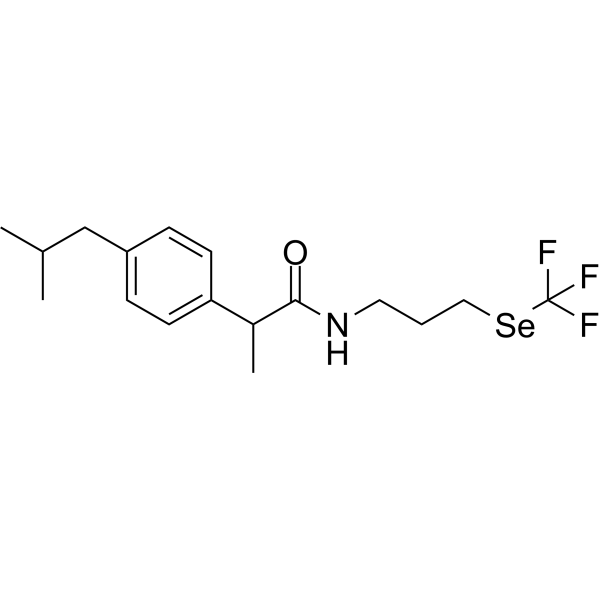 0 ImagesCat. No.: HY-147504CAS No.: 2529657-32-5Anticancer agent 63 (compound 3h) shows active in reducing the viability of different cancer cell lines, including SW480, HeLa, A549 and MCF-7, with IC50 values at 24 h of 4.9, 11.5, 9.4, and 3.4 μM, respectively. Anticancer agent 63 induce apoptosis in MCF-7 cells via down-regulating the expression of Bcl-2 and up-regulating the expression of IL-2 and Caspase-3. Anticancer agent 63 also shows antioxidant activity.
-
FKA-9i
 0 ImagesCat. No.: HY-181098CAS No.: 3060515-85-4FKA-9i is an orally active anticancer agent. FKA-9i directly binds to and promotes the degradation of oncoproteins LRPPRC (kd: 7.387 μM), YBX1 (kd: 16.52 μM) and RPN1 (kd: 26.82 μM). FKA-9i inhibits the MAPK signaling pathway and mitochondrial oxidative phosphorylation. FKA-9i also induces cancer cell cycle arrest, apoptosis, mitochondrial dysfunction and ROS accumulation. FKA-9i can be used in the research of tumors such as gastric cancer.
-
Apoptosis inducer 56
 0 ImagesCat. No.: HY-181060CAS No.: 952306-31-9Apoptosis inducer 56 is an apoptosis inducer. Apoptosis inducer 56 induces DNA damage (upregulation of γH2AX and p-ATM expression) by minor groove binding. Apoptosis inducer 56 induces intrinsic apoptosis (upregulation of p53 and Bax/Bcl-2 ratio, cleaved caspase-7) via S-phase cell cycle arrest. Apoptosis inducer 56 shows selectivity for cancer cells over normal breast epithelial cells. Apoptosis inducer 56 can be used for the research of breast cancer.
-
PROTAC PI3K/110β degrader-2
 0 ImagesCat. No.: HY-174469CAS No.: 3070438-79-5PROTAC PI3K/110β degrader-2 is a VHL-recruiting PI3K/110β PROTAC degrader, with DC50 values of 1.258 μM and 2.185 μM in MCF-7/ADM and A549/DDP cells, respectively. PROTAC PI3K/110β degrader-2 induces proteasomal degradation of PI3K/110β, inhibits phosphorylation of AKT and expression of Bcl-2, while suppressing the activity and expression of P-gp. It also induces endoplasmic reticulum stress and mitochondrial apoptosis via the PERK/CHOP pathway. PROTAC PI3K/110β degrader-2 exerts anti-tumor activity against multidrug-resistant cancer cells both in vitro and in vivo, and produces a synergistic effect when combined with Doxorubicin (HY-15142A) or Cisplatin (HY-17394), making it applicable for the research of multidrug-resistant cancers.
-
FLC-8
 0 ImagesCat. No.: HY-182937CAS No.: 3100242-36-9FLC-8 is an orally active FLT3 inhibitor with IC50 values of 10.2 nM, 11.6 nM and 24.10 nM against human FLT3-WT, FLT3-G697R and FLT3-N676D, respectively. FLC-8 inhibits FLT3 autophosphorylation and downstream STAT5, AKT and ERK signaling pathways, and induces apoptosis in acute myeloid leukemia (AML) cells. FLC-8 exhibits potent antitumor activity in the MV4-11 xenograft model. FLC-8 can be used for the research of acute myeloid leukemia.
-
MN33-47
 0 ImagesCat. No.: HY-182759MN33-47 is a multi-target anti-tumor compound with broad-spectrum anti-proliferative activity. MN33-47 relieves the inhibition of the mitochondrial apoptosis pathway by downregulating the anti-apoptotic protein Bcl-2, while activating caspase-3 and inhibiting Topoisomerase I activity, thereby promoting its degradation through the ubiquitin-proteasome and autophagy-lysosome pathways. MN33-47 can also induce DNA cross-linking and G2/M cell cycle arrest, inhibit cancer cell migration and activate the mitochondrial apoptosis pathway, thus exerting potent anti-tumor effects. MN33-47 can improve the water solubility of SN-38 (HY-13704), and exhibits dose-dependent tumor growth inhibition effects in CT26 tumor-bearing mouse models without obvious toxic and side effects. MN33-47 can be used in related studies on colorectal adenocarcinoma, cervical adenocarcinoma, hepatocellular carcinoma, alveolar basal epithelial adenocarcinoma, gastric cancer and colon cancer.
-
PARP1-IN-58
 0 ImagesCat. No.: HY-187473PARP1-IN-58 is a ROS-responsive prodrug constructed based on a natural stilbene scaffold, and its active parent nucleus 24c acts as a selective PARP-1 inhibitor. PARP1-IN-58 only hydrolyzes to release the active parent compound in the high-ROS microenvironment of tumors; the active parent compound competitively binds to PARP-1 and blocks DNA single-strand damage repair, upregulates intracellular ROS levels, reduces mitochondrial membrane potential, and thereby induces cell cycle arrest and mitochondria-dependent apoptosis. PARP1-IN-58 exerts potent proliferation-inhibiting effects on BRCA-deficient breast cancer cells under simulated tumor oxidative stress conditions, and exhibits tumor growth inhibitory activity in breast cancer xenograft models. PARP1-IN-58 can be used in cancer-related research.
-
Neosolaniol
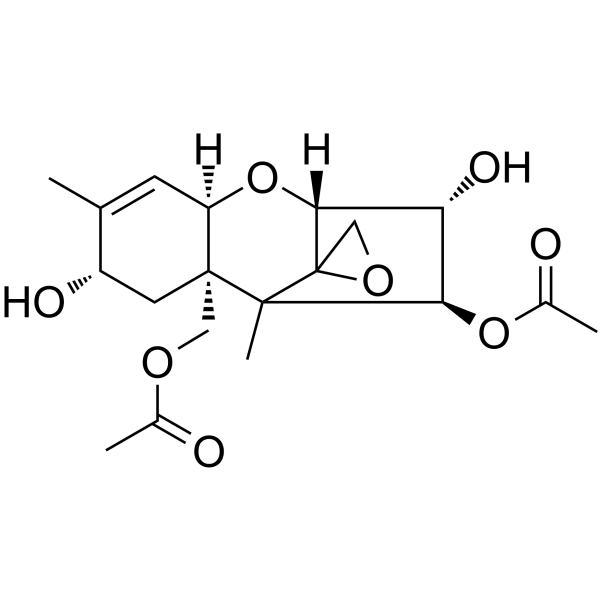 0 ImagesNeosolaniol is an orally active type A trichothecene mycotoxin, and it is a metabolite of T-2 Toxin (HY-N6792) in human cancer cells and renal epithelial cells. Neosolaniol targets Bax, Bcl-2, caspase 3, caspase 8, and cytochrome c, thereby inducing apoptosis, emesis and anorexia. Neosolaniol reduces intracellular ATP levels, elevates ROS levels, decreases mitochondrial membrane potential, induces mitochondrial damage, and exerts toxicity on Leydig cells. Neosolaniol downregulates the expression of intestinal tight junction proteins in broilers and increases the load of Salmonella enteritidis in the cecum of broilers. Neosolaniol can be used in research related to anorexia, lymphoma, Fusarium melonis rot, and Salmonella infection.
-
Hsp90-IN-42
 0 ImagesCat. No.: HY-176279Hsp90-IN-42 is a heat shock protein 90 (Hsp90) inhibitor with an IC50 of 15.65 nM against human targets. Hsp90-IN-42 destabilizes EGFR and inhibits the activation of the EGFR-Akt signaling pathway. Hsp90-IN-42 suppresses the proliferation and migration of cancer cells, induces cell cycle arrest by downregulating CDK12 and CDK13, and triggers mild apoptosis via downregulating Bcl-2 and upregulating Bax. Hsp90-IN-42 inhibits tumor growth in xenograft mouse models. Hsp90-IN-42 can be used in research related to colorectal cancer.
-
Antitumor agent-217
 0 ImagesCat. No.: HY-183312Antitumor agent-217 is a dual mitochondria-targeted anticancer agent. Antitumor agent-217 exhibits potent and selective antiproliferative activity against bladder cancer cell line J82 (IC50 = 6.3 μM), and inhibits colony formation and migration of J82 cells. Antitumor agent-217 accumulates in mitochondria, alters mitochondrial morphology, reduces ATP production, increases ROS generation and decreases mitochondrial membrane potential. Antitumor agent-217 induces apoptosis (Apoptosis) and ferroptosis (Ferroptosis) in bladder cancer cells. Antitumor agent-217 can be used for the research of bladder cancer.
-
A-371191
 0 ImagesCat. No.: HY-122275CAS No.: 406228-58-8A-371191 is a selective Bcl-XL antagonist with a Ki <0.5 μM, and also acts as a mitochondria-targeting agent and chemosensitizer. A-371191 restores the sensitivity of cancer cells overexpressing Bcl-XL to Cisplatin (HY-17394) and Doxorubicin (HY-15142A). A-371191 reduces tumor volume in mice with intraperitoneal tumors. A-371191 can be used in the research of acute myeloid leukemia.
-
Spicamycin
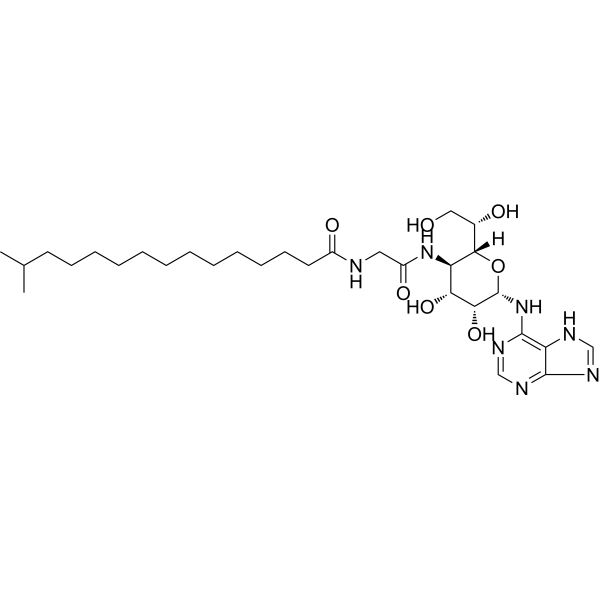 0 ImagesCat. No.: HY-127130CAS No.: 87099-85-2Spicamycin, an adenine nucleoside antibiotic with antifungal and antitumor activities. Spicamycin is also a potent inducer of differentiation of myeloid leukemia cells. Spicamycin induces apoptosis in NB4 cells via down-regulation of Bcl-2 expression and modulation of PML protein.
-
VEGFR-2/AKT-IN-2
 0 ImagesCat. No.: HY-169431VEGFR-2/AKT-IN-2 (Compound 5) is a VEGFR-2/AKT inhibitor (IC50: 0.061 μM for VEGFRin HepG2 cell). VEGFR-2/AKT-IN-2 reduces total and phosphorylated AKT as well as up-regulates BAX and Caspase-3 and down-regulates Bcl-2 in cells, thereby promoting Apoptosis. VEGFR-2/AKT-IN-2 causes cell cycle arrest in S phase. VEGFR-2/AKT-IN-2 inhibits the growth of human liver tumor cells.




